How Much Raw Food Should I Feed My Dog?
Feed adult dogs 2-3% of body weight in raw food daily. Puppies need 5-8%, seniors 1.5-2%. Here are exact amounts by weight with a reference table.
The Body Weight Percentage Formula
Raw feeding uses a simple framework: feed a percentage of your dog's ideal body weight per day. The key word is ideal, if your dog is overweight, calculate based on their target weight, not their current weight. If they're underweight, calculate on current weight until they build up.
The formula: Daily food (oz) = body weight (lbs) × feeding% × 16
The percentages:
- Puppies under 12 months: 5-8%
- Active adults (1-7 years): 2.5-3%
- Moderate adults: 2-2.5%
- Low-activity or overweight adults: 1.5-2%
- Senior dogs (7+ years): 1.5-2%
Activity matters. A sled dog running 20 miles a day needs 3%+ to maintain weight. A retired Basset Hound that mostly sleeps will gain weight fast at 2.5%.
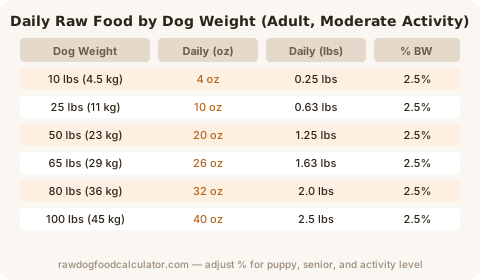
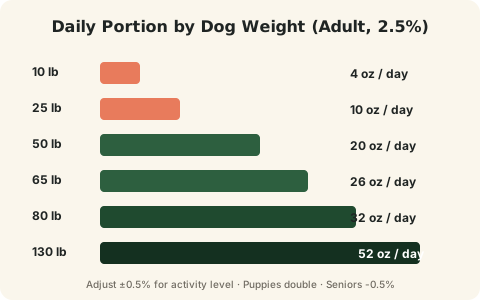
Reference Table by Weight (Adult, Moderate Activity, 2.5%)
| Dog Weight | Daily Food (oz) | Daily Food (lbs) |
|---|---|---|
| 10 lbs | 4 oz | 0.25 lbs |
| 25 lbs | 10 oz | 0.63 lbs |
| 40 lbs | 16 oz | 1.0 lbs |
| 50 lbs | 20 oz | 1.25 lbs |
| 65 lbs | 26 oz | 1.63 lbs |
| 80 lbs | 32 oz | 2.0 lbs |
| 100 lbs | 40 oz | 2.5 lbs |
| 130 lbs | 52 oz | 3.25 lbs |
For puppies or seniors, or if your dog's activity level differs, use our raw dog food portion calculator, it applies the correct percentage automatically based on life stage and activity.
Why Not Just Use Cups?
Kibble uses cups as a measurement because the caloric density of dry food is predictable, roughly 300-400 kcal per cup depending on brand. Raw food varies widely in fat and water content. A cup of chicken liver weighs about 8 oz but delivers over 500 kcal. A cup of lean ground turkey might deliver 200 kcal. Weight is the only reliable way to portion raw food.
Invest in a kitchen scale. A basic digital scale accurate to 0.1 oz costs under $15 and is the most important tool in a raw feeder's kitchen.
Adjusting for Life Stage
Puppies
Feed 5-8% based on current weight, not projected adult weight. Update the amount weekly for the first 6 months as weight changes quickly. Split across 3-4 meals per day, puppies' stomachs are small.
A 10-week-old Labrador at 12 lbs eating BARF at 8% needs:
12 × 0.08 × 16 = 15.4 oz per day, or about 3.8 oz per meal across 4 meals.
Active Adults
For a 65 lb Border Collie doing agility 5 days a week, use 3%:
65 × 0.03 × 16 = 31.2 oz per day
The same dog in winter with reduced training loads back to 2.5%:
65 × 0.025 × 16 = 26 oz per day
Raw feeding is not set-and-forget. Recalculate seasonally and after any major activity change.
Seniors
Senior dogs generally need less food due to lower metabolic rate and reduced muscle maintenance requirements. But some seniors, particularly those with chronic illness or muscle wasting, actually need more protein, just with less fat. This is where working with a vet matters.
A 12-year-old 50 lb dog on low activity:
50 × 0.015 × 16 = 12 oz per day
For detailed senior feeding guidance, read our raw feeding for senior dogs guide.
How to Tell if You're Feeding the Right Amount
The body condition score (BCS) is your most accurate feedback tool. Run your hands along your dog's ribcage:
- Can you easily feel ribs but not see them? Ideal weight, maintain current portions.
- Can you see ribs prominently? Underweight, increase by 10-15% for two weeks, then reassess.
- Can't feel ribs without pressing? Overweight, reduce by 10-15% and switch to the lower end of the percentage range.
Adjust in small increments, 10-15% at a time, and wait 2-3 weeks before adjusting again. Raw food is rich, and sudden large changes cause digestive upset.
The Daily Breakdown: More Than Just Total Weight
Once you know how much to feed, you need to know what to feed. A 26 oz daily ration for a 65 lb adult on BARF isn't 26 oz of chicken breast. It's:
- 18.2 oz muscle meat
- 2.6 oz raw meaty bones
- 1.3 oz liver
- 1.3 oz other secreting organs
- 2.6 oz vegetables and fruit
Use our BARF calculator to generate the full component breakdown, enter your dog's weight, select adult/moderate, choose BARF or Prey Model, and get exact ounces for each component.
Common Feeding Mistakes to Avoid
Feeding by eye. "Looks about right" leads to either chronic underfeeding (dog loses muscle) or overfeeding (dog gains fat). Weigh everything for the first 3-4 months until you've calibrated your eye.
Not adjusting for weight changes. If your dog gains 5 lbs, you need to recalculate. If they've lost 3 lbs after an illness, same. The percentage stays the same; the absolute amount changes.
Feeding the same protein forever. Nutritional completeness requires rotation. Aim for at least 3 protein sources per week, chicken, beef, and turkey is a solid starting rotation.
For more detail on building a balanced raw diet, see our complete BARF diet guide and our post on common raw feeding mistakes.