The Complete BARF Diet Guide for Dogs
Learn exactly what the BARF diet is, the right ratios for muscle meat, bone, organs, and vegetables, and how to feed it correctly.
What Is the BARF Diet?
BARF stands for Biologically Appropriate Raw Food (some people say "Bones and Raw Food", same thing). Veterinarian Dr. Ian Billinghurst developed and popularized it in his 1993 book Give Your Dog a Bone, arguing that dogs evolved eating raw whole prey and that modern kibble introduced in the 1950s is fundamentally mismatched to canine biology.
The core premise: dogs are adapted to digest raw meat, raw bone, and raw organs. Their gut pH is lower than ours, their digestive tract is shorter, and they produce enzymes specifically suited to breaking down raw animal protein. Cooking denatures proteins, destroys heat-sensitive nutrients, and removes moisture that wild prey would naturally provide.
BARF takes that framework and adds a practical layer, it includes 10% vegetables and fruit, acknowledging that dogs in the wild would consume partially digested plant matter from prey stomachs and scavenge seasonal fruit when available. This is what separates BARF from the Prey Model, which excludes plant matter entirely.
The BARF Ratios (And Why They Are What They Are)
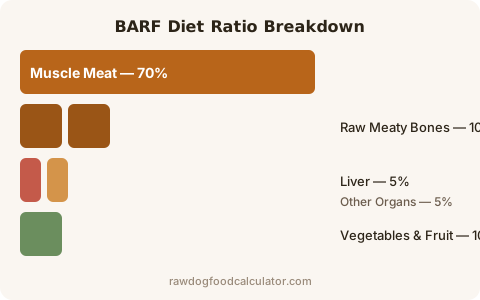
The standard BARF breakdown is:
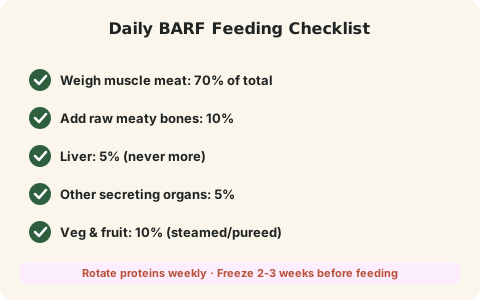
- 70% muscle meat, the energy and protein foundation
- 10% raw meaty bones (RMBs), calcium, phosphorus, joint health
- 5% liver, the most nutrient-dense food in existence
- 5% other secreting organs, kidney, spleen, pancreas, brain
- 10% vegetables and fruit, fiber, antioxidants, phytonutrients
These aren't arbitrary percentages. They mirror the approximate composition of a whole prey animal with the hide, feathers, and excess gut contents removed. A rabbit, for example, is roughly 50-60% muscle, 10-15% bone, and the remainder organ and connective tissue. The BARF model adjusts these proportions based on what's nutritionally optimal across a domestic dog's lifespan.
Muscle meat provides protein, fat, B vitamins, iron, zinc, and selenium. It's the caloric driver of the diet, you can't go wrong with a quality source. Chicken, beef, turkey, lamb, pork, kangaroo, and venison all qualify. Rotate proteins across the week to cover the full amino acid spectrum.
Raw meaty bones are not just calcium delivery. The act of gnawing and crushing RMBs cleans teeth, exercises jaw muscles, and stimulates the gut. Chicken backs, turkey necks, duck necks, lamb ribs, these are the working bones. Avoid weight-bearing bones from large animals (marrow bones, beef femurs), they're too dense, crack teeth, and don't digest.
Liver is non-negotiable. It delivers retinol (vitamin A), B12, folate, copper, and CoQ10 in concentrations found nowhere else. But 5% is the hard ceiling. Feed more and you risk hypervitaminosis A over time, fatigue, bone pain, and coat changes. Weigh it.
Other secreting organs provide a different nutrient profile than liver, kidney adds vitamin D and B vitamins, spleen is high in iron, pancreas provides digestive enzymes. Many raw feeders rotate through what's available from their supplier.
Vegetables are the most debated component. Prey Model advocates say skip them entirely; BARF practitioners argue the fiber, chlorophyll, and antioxidants support gut health, liver detoxification, and cellular protection. If you go BARF, lightly steam or puree vegetables, dogs can't break down cellulose efficiently, so raw whole vegetables pass mostly undigested.
How Much to Feed: The BARF Calculation
Daily food = dog's weight × feeding percentage
Adult dogs (1-7 years): 2-3% of body weight per day
Puppies (under 12 months): 5-8% of body weight per day
Senior dogs (7+ years): 1.5-2% of body weight per day
A 50 lb adult dog on moderate BARF would eat 50 × 0.025 × 16 = 20 oz per day.
Broken down:
- Muscle meat: 14 oz
- Raw meaty bones: 2 oz
- Liver: 1 oz
- Other organ: 1 oz
- Vegetables: 2 oz
Rather than doing this math every time, plug your dog's weight into our BARF diet calculator, it generates the full breakdown in seconds and lets you toggle between BARF and Prey Model to compare.
Sourcing Quality Ingredients
Your BARF diet is only as good as the ingredients. Some guidelines:
Prioritize grass-fed and pasture-raised where possible. Factory-farmed animals have higher omega-6 to omega-3 ratios, which promotes inflammation over time. Grass-fed beef and pasture-raised chicken are worth the extra cost, or source directly from local farms and abattoirs, which is often cheaper than pet stores.
Freeze before feeding. Freeze all meat for 2-3 weeks at -4°F (-20°C) to eliminate most parasites, especially in pork (Trichinella) and wild-caught fish (salmon poisoning disease). This is standard practice among experienced raw feeders.
Buy in bulk and portion. Purchase a week's supply at once, pre-portion daily amounts into zip-lock bags or silicone containers, and freeze. Thaw in the fridge 24 hours before feeding. Never microwave raw meat, it starts cooking the outside, alters the fat, and can create hot spots.
Organ sourcing is often the hardest part. Many grocery stores carry beef and chicken liver. Kidney and spleen require a butcher or an online raw pet food supplier. Establishing a relationship with a local butcher is the single best thing a new raw feeder can do, they often have organ trim for near-free.
Transitioning to BARF
Don't blend raw and kibble in the same meal. They digest at different rates (kibble takes 8-10 hours; raw clears the stomach in 3-4 hours), which can cause fermentation and digestive upset. Do a hard switch or a cold turkey transition:
- Withhold food for 12-24 hours to empty the gut
- Introduce a single protein (chicken is easiest) with bone, no variety yet
- After 5-7 days of solid stools, add a second protein
- Week 3 onward: begin adding organ and vegetables
Loose stools in week one are normal. Firm, white, chalky stools mean too much bone, cut bone by 20-30%. Mucousy stools often mean the gut is detoxing, stick with it unless there's blood.
For a more detailed transition plan, read our guide to switching your dog to raw food.
Common BARF Mistakes
Feeding the wrong ratio. The 70/10/5/5/10 split isn't just a suggestion, it's what makes BARF nutritionally complete. A diet that's 90% chicken with a bit of liver is not BARF; it's unbalanced raw. Use a BARF portion calculator and weigh your ingredients.
Using the same protein source forever. Chicken is cheap and easy, but if that's all your dog eats for months, you'll create deficiencies in nutrients that chicken doesn't carry in abundance (like zinc and vitamin D). Rotate proteins weekly.
Over-supplementing. A properly built BARF diet doesn't need much supplementation. Adding extra calcium when you're already hitting 10% bone will cause hypercalcemia. Add only what testing shows is missing.
Skipping organ meat. "I just do meat and bone" isn't BARF, it's missing the most nutrient-dense foods in the diet. Even if you can only get beef liver, 5% is critical.
Is BARF Right for Every Dog?
Most healthy dogs do well on BARF. Exceptions:
- Immunocompromised dogs, dogs on chemotherapy, with autoimmune disease, or recovering from surgery face higher pathogen risk from raw meat
- Dogs with pancreatitis history, high-fat organ content can trigger flare-ups
- Households with vulnerable people, infants, elderly, or immunocompromised family members face some cross-contamination risk from raw meat handling
The American Veterinary Medical Association (AVMA) recommends against raw diets in multi-pet or vulnerable-household situations. Weigh the pros and cons with your vet.
For dogs with health conditions, read our raw feeding for senior dogs guide for adjusted recommendations.
Try the Calculator
Whether you're building your first raw meal or recalibrating after a weight change, use our raw dog food calculator to get your dog's exact BARF breakdown in seconds. Enter weight, life stage, activity level, and choose BARF, it handles the math.