How to Transition Your Dog to a Raw Diet
Switching to raw doesn't have to mean digestive chaos. A 4-week protocol starting with a single protein gets most dogs transitioned cleanly.
Why Transition Gradually?
Dogs' gut microbiomes are highly adaptive, but they need time to adjust. A gut tuned to processing highly processed starch-heavy kibble will take 2-4 weeks to shift its bacterial colonies toward ones better suited to high-protein, high-fat raw food.
Throw a dog straight into a full BARF diet and you'll likely see loose stools, excess mucus in the stool, or vomiting in the first week. Most dogs recover within a few days, but the transition is easier on everyone if you slow it down.
The other reason to transition gradually: you learn your dog. Every dog responds differently to different proteins. Some do beautifully with beef from day one; others get loose stools. Starting with a single bland protein lets you establish a baseline before you start introducing variables.
The Core Rule: Don't Mix Raw and Kibble
Don't blend raw and kibble in the same meal. They digest at different rates, kibble takes 8-12 hours to leave the stomach; raw meat clears in 3-4 hours. Feeding them together can cause the raw to sit in the stomach alongside fermenting kibble, leading to nausea and vomiting.
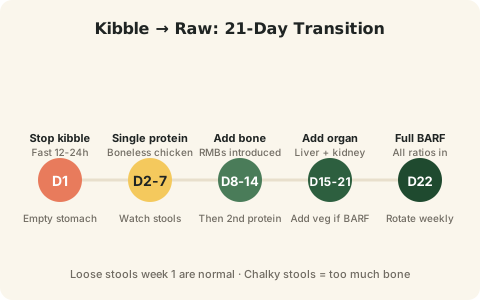
Do a hard switch, stop the kibble, fast your dog for 12-24 hours, then begin raw. For most healthy adult dogs, a short fast before switching is fine and actually helps by emptying the gut.
The exception: old, sick, or underweight dogs. For these animals, a slower kibble reduction approach over 3-4 days may be gentler. Replace 25% of kibble with raw on day one, 50% on day three, 75% on day five, then 100% from day seven. Feed the kibble and raw in separate meals if possible.
Week-by-Week Protocol
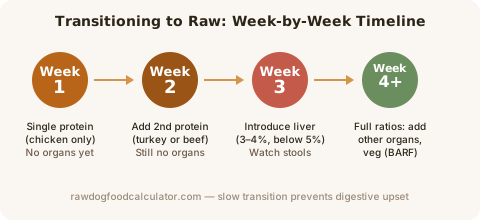
Week 1: One Protein, Meat and Bone Only
Start with chicken. Chicken is the gentlest introduction protein, mild, widely available, and well-tolerated by most dogs.
What to feed:
- Chicken thighs, breasts, or backs (muscle meat)
- Chicken backs or wings for the bone component
Ratio: aim for roughly 90% meat and 10% bone. No organ meat yet, organ meat is rich and frequently causes loose stools when introduced too early.
Feed 3-4 times per day for puppies, twice per day for adult dogs. Total amount: 2-2.5% of body weight (use the calculator with "adult" and your dog's weight for exact amounts).
What to expect: The first few days often produce loose, darker stools as the gut adjusts. This is detox, normal. By days 4-7, stools typically firm up significantly, often becoming smaller and less odorous than kibble stools.
Week 2: Add a Second Protein
Once stools are consistent and firm, introduce a second protein, turkey or beef work well. Keep chicken as 70-80% of the diet; let the new protein make up the remaining 20-30%.
Still no organ meat at this stage.
What to watch: If the new protein causes loose stools, reduce its proportion and increase chicken again. Some dogs need extra time with beef specifically, it's richer and fattier than chicken.
Week 3: Introduce Liver
Start with chicken liver at about 3-4% of total diet (slightly below the 5% cap to give the gut room to adjust). Beef liver is more concentrated and more likely to cause loose stools initially, save it for week 4 or 5.
Feed liver once or twice during the week rather than daily, it makes the introduction gentler.
What to watch: Mucousy stools or sudden loose stools after adding liver are common and usually resolve in 2-3 days. If loose stools persist beyond 3 days of liver feeding, reduce the liver amount by half and try again.
Week 4+: Full BARF or Prey Model Ratios
Now you build to the full diet:
- Add a third protein (lamb, pork, duck, or rabbit)
- Bring liver up to the full 5%
- Add other secreting organs (kidney, spleen) to reach the second 5%
- If following BARF: introduce pureed or lightly steamed vegetables at 5%, then increase to 10%
Use our BARF ratio calculator to generate the exact breakdown for your dog's weight, life stage, and activity level. This makes it easy to see exactly how many ounces of each component to prepare.
Stool Guide: Reading Your Dog's Feedback
Stool consistency is your primary diagnostic tool during transition:
| Stool | Likely Cause | Action |
|---|---|---|
| Loose/liquid, dark | Normal detox in first week | Wait 3-4 days |
| White, chalky | Too much bone | Reduce bone by 20% |
| Yellow/orange mucus | Gut adjusting to fat | Reduce fat, use lean chicken temporarily |
| Very loose after organ addition | Organ introduced too fast | Halve organ amount, re-introduce slowly |
| Firm, small, dark, slight odor | Ideal raw stool | Maintain current ratios |
| Blood-streaked | Vet check required | Don't wait |
The ideal raw stool is firm, small, and almost odorless compared to kibble stools. It may be slightly white after a bone-heavy meal, that's normal. A stool that's consistently white and powdery means too much bone overall.
Managing the Switch With a Picky Dog
Some dogs refuse raw food, especially if they've been on kibble their entire lives. Their olfactory system has been calibrated for the artificial flavors and aromas added to processed pet food. Raw meat often smells too neutral or unfamiliar.
Tactics that work:
- Slightly warm the meat (30 seconds in warm water, not microwave)
- Sear the outside of meat for 1-2 seconds in a dry pan, the smell changes dramatically
- Sprinkle a tiny amount of parmesan cheese or nutritional yeast over the meat initially
- Feed when hungry, fast for 12-16 hours before offering raw for the first time
- Start with boneless chicken and graduate to bone-in once they're eating enthusiastically
Persistence pays off. Most dogs convert within 3-7 days once they understand this is their meal.
Special Cases
Puppies: The same protocol applies but faster, puppies can often introduce variety in week 2 rather than week 3 because their gut bacteria are more adaptive. Feed 3-4 times daily during the transition period.
Seniors: Slow everything down by 1-2 weeks at each stage. Senior digestive systems adapt more slowly. Start with very lean chicken (no skin) to reduce fat load. Our senior raw feeding guide covers this in detail.
Dogs with digestive conditions: IBD, EPI (exocrine pancreatic insufficiency), or chronic colitis require veterinary guidance before starting a raw diet. Don't transition these dogs without a vet involved.
Once your dog is fully transitioned, revisit their portions using our raw food calculator, weight may change in the first month, and portion adjustments are often needed after the initial transition period.