Do Raw-Fed Dogs Need Supplements? What and When to Add
A properly built raw diet needs few supplements. Omega-3s are the main exception. Here is what raw-fed dogs actually need and what is unnecessary.
The Raw Feeding Paradox on Supplements
There's a contradiction that trips up many raw feeders: they spend significant effort building a nutrient-dense whole-food diet, then add a pile of supplements on top, many of which duplicate what the food already provides, and some of which disrupt the nutritional balance they've carefully constructed.
A raw diet following BARF or Prey Model ratios with protein rotation provides:
- All essential amino acids from varied muscle proteins
- Vitamin A, B12, K2, copper, folate, iron from liver
- Vitamin D, selenium from kidney and fish
- Calcium and phosphorus from raw meaty bones in the right ratio
- CoQ10 and taurine from heart
- Zinc, manganese from bone marrow
- Natural digestive enzymes from pancreas
- Iron from spleen
What it often falls short on: omega-3 fatty acids, specifically EPA and DHA.
The One Supplement Most Raw-Fed Dogs Actually Need
Omega-3 Fatty Acids (EPA and DHA)
The omega-6 to omega-3 ratio in the modern food supply, including meat from conventionally raised animals, has shifted dramatically. Grain-fed animals have omega-6:omega-3 ratios of 10:1 to 20:1. Grass-fed animals are closer to 2:1-4:1. Wild prey animals eaten by wolves are about 3:1.
For dogs eating primarily conventional chicken, beef, and pork, the omega-6 load is high. Chronic omega-6 excess is pro-inflammatory. EPA and DHA (marine omega-3s) are anti-inflammatory, support brain function, coat quality, kidney health, and cardiovascular function.
Food sources of EPA/DHA:
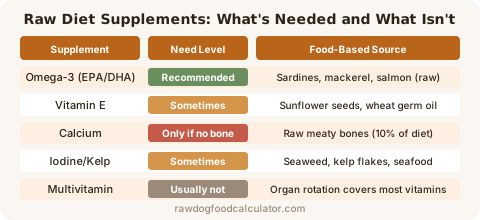
- Small whole oily fish, sardines, mackerel, sprats (whole raw or packed in spring water, not oil). 1-2 sardines 2-3 times per week for a medium dog is an excellent food-based approach
- Salmon or trout, freeze for 3+ weeks first (see salmon poisoning disease notes)
- Green-lipped mussels, high EPA/DHA plus natural glucosamine/chondroitin; available as whole frozen mussels or powder supplements
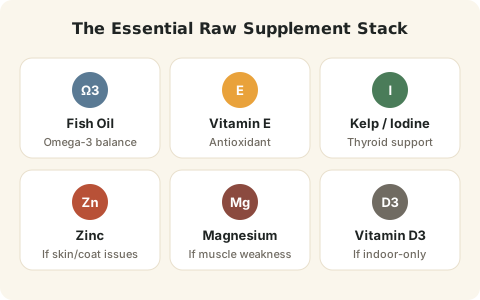
Supplement option: A high-quality fish oil capsule or liquid providing 300-500 mg EPA/DHA combined per day for a 50 lb dog. Don't use cod liver oil, it's too high in vitamin A, which adds to liver's already significant A contribution.
What doesn't work: Flaxseed oil, chia seeds, or other plant ALA omega-3s. Dogs convert ALA to EPA/DHA very inefficiently (less than 5%). Marine sources only.
Supplements That Are Sometimes Needed
Vitamin E
The reason vitamin E sometimes needs supplementing in raw diets: fish oil. Adding fish oil increases polyunsaturated fat intake, which requires proportionally more vitamin E for protection against oxidative damage. If you're feeding fish regularly or adding fish oil, adding vitamin E (50-100 IU daily for most dogs) makes sense.
Food sources of vitamin E include sunflower seeds and wheat germ oil. A teaspoon of wheat germ oil added to a meal 3-4 times per week for a medium dog covers this without supplementation.
Iodine/Kelp
Iodine is an often-overlooked nutrient in land-animal-based raw diets. Muscle meat from land animals is low in iodine; fish and seafood are good sources. If your dog eats fish regularly, iodine is covered. If the diet is purely land-animal-based with no seafood, a modest iodine source is worth adding.
Kelp powder ($10-15 for a large bag) sprinkled onto food 3-4 times per week is a simple solution. Use sparingly, excessive iodine disrupts thyroid function. About ¼ tsp for a large dog, ⅛ tsp for a small dog, a few times per week is appropriate.
Digestive Enzymes and Probiotics
Some dogs, particularly those transitioning from kibble in middle or senior age, benefit from digestive enzyme support during the transition period. Fresh pancreas (a secreting organ that provides natural lipase, protease, and amylase) is the food-based approach; commercial canine digestive enzyme supplements work too.
Probiotics become more useful as dogs age. A canine-specific probiotic (Lactobacillus acidophilus, Bifidobacterium species) or occasional small amounts of fermented food (plain kefir, raw sauerkraut) supports microbiome diversity.
These are useful additions for specific situations, not baseline requirements for a healthy young or adult dog.
Supplements That Are Usually Not Needed
Calcium
If your raw diet includes 10% raw meaty bones, you have calcium covered. Adding calcium supplements on top of a bone-balanced diet causes hypercalcemia, too much calcium disrupts phosphorus absorption, can cause constipation, and in growing dogs may contribute to developmental orthopedic disease.
The only situation requiring calcium supplementation: completely boneless raw diets (some dogs with dental problems can't eat bones). In that case, you need to calculate and supplement precisely, this is a job for a veterinary nutritionist, not a label estimate.
Multivitamins
A properly built rotating raw diet with organ meat doesn't need a multivitamin. It already provides vitamins in their whole-food form, which is more bioavailable than synthetic supplements. Adding a multivitamin on top risks doubling up on fat-soluble vitamins (A, D, E, K) that accumulate.
If you feel uncertain about your diet's completeness, the solution is fixing the diet ratios, not patching them with a multivitamin. Use our raw food calculator to check your ratios are correct, and consult a board-certified veterinary nutritionist (DACVN) if you want a full diet evaluation.
Glucosamine and Chondroitin Supplements
These are marketed heavily for joint health. Evidence from supplement form is mixed. The food-based approach is more reliable: chicken feet are exceptionally high in natural glucosamine; beef trachea is high in chondroitin. Feeding these 2-3 times per week provides these compounds in their bioavailable whole-food form.
Building a Supplement Protocol
For most healthy raw-fed adult dogs, this is sufficient:
- Sardines in water (not oil) 2-3 times per week, covers omega-3 and iodine
- Vitamin E (50-100 IU) if you're also adding fish oil, prevents oxidative stress from increased PUFA
- That's it for most dogs
For seniors, add:
- Green-lipped mussel (food or supplement) for joint support
- Canine probiotic 2-3 times per week
For dogs not eating fish at all, add:
- Kelp powder small amount 3-4x per week for iodine
Before adding any supplement, verify your base diet is correctly built. A poorly portioned diet isn't fixed by supplements, it's fixed by correcting the ratios. Calculate your dog's daily portions using our raw dog food calculator, then audit whether you're actually hitting each component target.
For more on building the right diet structure, read our BARF diet guide. For a breakdown of the organ component specifically, see our organ meat guide for dogs.