Organ Meat for Dogs: Why Liver and Organs Are Essential
Organ meat makes up 10% of a raw diet but delivers most of its vitamins and minerals. Learn which organs to feed, how much, and where to source them.
Why Organ Meat Can't Be Skipped
New raw feeders often gravitate toward the easy parts, chicken thighs, ground beef, raw bones. Organ meat feels complicated, sometimes expensive, and can be hard to source. But leaving it out fundamentally breaks the diet.
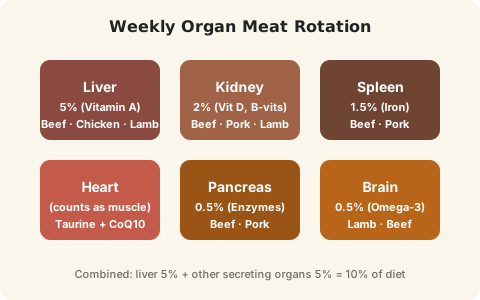
Organs are where the vitamins live. Muscle meat alone, even with bone, doesn't deliver adequate vitamin A, B12, D, E, copper, zinc, or selenium. Wild prey animals are eaten whole, including the liver, kidney, and spleen. Domestic raw feeding replicates this with a 10% organ allocation, 5% liver and 5% from other secreting organs.
The distinction between liver and "other secreting organs" isn't arbitrary. Liver is in its own category because of its extraordinary concentration of fat-soluble vitamins. Feeding too much causes toxicity. The remaining 5% from other organs provides different micronutrients that liver doesn't dominate.
Liver: The Superorgan
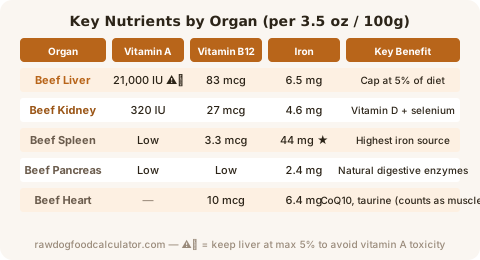
No food on the planet concentrates nutrients like beef liver. Per 100g (3.5 oz):
- Vitamin A: ~21,000 IU (over 100x the amount in muscle meat)
- Vitamin B12: 83 mcg (about 1,400% of a human daily value, dogs need it too)
- Folate: 290 mcg
- Copper: 14 mg
- Iron: 6.5 mg
- Coenzyme Q10: significant amounts
The problem is the ceiling. Vitamin A is fat-soluble, meaning excess amounts accumulate in the body rather than being excreted. Chronic overconsumption causes hypervitaminosis A, a serious condition characterized by lethargy, bone pain, calcification of soft tissue, and eventually liver failure.
Cap liver at 5% of total diet. No exceptions.
For a 65 lb adult dog eating 26 oz/day: that's 1.3 oz of liver per day. That's less than a third of a standard chicken liver. Weigh it. Don't eyeball it.
Chicken liver is gentler than beef liver, lower vitamin A concentration, easier to source, and most dogs prefer the taste. Beef liver is more concentrated in everything. Both are excellent; rotate them.
Other Secreting Organs (The Second 5%)
The term "secreting organ" distinguishes organs that produce secretions (hormones, enzymes, digestive fluids) from structural muscle organs. Heart, for example, is technically muscle tissue, it's counted as muscle meat in most raw feeding frameworks, not organ meat.
Secreting organs include:
- Kidney, high in B vitamins, selenium, vitamin D
- Spleen, the highest natural source of iron (44 mg per 100g, extraordinary)
- Pancreas, provides natural digestive enzymes including lipase and amylase
- Brain, high in omega-3 fatty acids and phospholipids
- Thymus (thymus sweetbreads), immune system support
- Testicles, similar nutrient profile to other glandular tissue
Heart is muscle meat, not organ. In Prey Model raw feeding, heart counts toward the 80% muscle allocation. In BARF, it counts toward the 70% muscle. This matters when you're doing precise calculations, heart is excellent food, but it doesn't satisfy the organ requirement.
Sourcing Organ Meat
This is where many raw feeders struggle. Supermarkets carry beef and chicken liver reliably. Everything else requires effort.
Grocery stores: Chicken liver ($1-3/lb), beef liver ($2-4/lb), beef kidney (some stores). This covers your liver requirement plus some of the "other organ" allocation if kidney is available.
Butchers: Your local butcher is the best source for spleen, pancreas, and thymus. Call ahead and ask what they trim regularly. Organ trim from cattle and pigs often sells for near-cost or free because it's not a retail item. Regular customers get first access to supply.
Asian grocery stores: Pork kidney, beef tripe (technically not a secreting organ but an excellent gut-health food), pork liver, and duck hearts are commonly available at lower prices than supermarkets. Chicken hearts are usually cheap and widely stocked.
Raw pet food suppliers and co-ops: Online suppliers like My Pet Carnivore, Omas Pride, and Raw Feeding Miami sell organ mixes ($2-5/lb) that combine spleen, kidney, pancreas, and testicles, everything you need for the second 5% in one product. Ideal for those who can't source individual organs locally.
Farms: If you're near agricultural land, farms that raise beef cattle often have organ trim available during processing season at very low cost. Building these relationships takes time but pays off.
How to Feed Organ Meat
Most dogs love liver and eat it enthusiastically. Other organs are hit or miss depending on the individual dog's preferences.
If your dog refuses organ meat:
- Freeze and grate frozen organ over their meal, the texture change sometimes helps
- Lightly sear the outside of liver (1-2 seconds per side in a dry pan), the smell changes dramatically and many picky dogs suddenly find it irresistible
- Mix ground organ into ground muscle meat, harder to pick around
- Try different species, some dogs that refuse beef liver eat chicken liver happily, and vice versa
Feeding schedule options:
Some raw feeders include a small amount of organ in every meal. Others dedicate one or two meals per week to an organ-heavy mix. Both work nutritionally as long as the weekly totals are correct. Feeding organ meat in one meal per week (rather than small daily amounts) can make sourcing and portioning simpler.
A Worked Example
65 lb adult Labrador, BARF, moderate activity, 26 oz/day total:
- Liver allocation: 26 × 0.05 = 1.3 oz liver/day (or 9.1 oz per week)
- Other organ allocation: 26 × 0.05 = 1.3 oz other organ/day
Weekly totals: 9.1 oz liver + 9.1 oz other organ. That's roughly half a pound of each per week, easy to source, weigh, and batch-prep.
Use our raw feeding calculator to generate exact amounts for your dog's specific weight and life stage. Select BARF or Prey Model, liver and organ amounts are displayed in the results breakdown.
Avoiding Organ Meat Mistakes
Overfeeding liver. Symptoms of early vitamin A toxicity in dogs include reduced appetite, lethargy, stiff neck, and bone pain. These can develop slowly over months if liver exceeds 10% of the diet. Keep records and weigh accurately.
Using heart to fill the organ quota. Heart is muscle. Delicious, nutritious muscle, but it doesn't count toward your 10% organ requirement.
Organ in the first week of transition. When transitioning from kibble to raw, introduce muscle and bone first. Add organ in week 2-3 after the gut has adjusted. Organ meat introduced too early causes loose stools in most dogs.
For more on building a balanced raw diet, read our BARF diet guide or our guide on transitioning to raw food.